Notes from the edge of the web
Lookoutrakivaro
Dispatch · Websites · Updated January 2026

Inventive Sites, Briefly Reviewed

A short shelf of websites that changed how we think about the browser: not the biggest platforms, but the ones that do one thing with unusual clarity.

What we mean by inventive

Most of the web is built from the same handful of templates. That is not a complaint; shared patterns make sites easy to use. But every so often someone ignores the template and asks what the medium itself makes possible. The results tend to feel obvious in hindsight, which is usually the sign of a genuinely good idea.

For this page we used three tests. First, the site must do something that would be awkward or impossible in print, on television or in a native app store. Second, it must be usable by a curious visitor within a minute, without an account. Third, it must still be live and maintained at the time of writing. Novelty alone is not enough; plenty of experiments dazzle for an afternoon and then break.

Field noteNone of these sites paid for inclusion, and we have no commercial relationship with any of them. Links go directly to the sites themselves.

The shelf

Eight sites worth an evening

Glowing green globe of radio stations on a laptop screen at nightAudio · Exploration

Radio Garden

A rotating globe covered in dots, each a live radio station. The interface is the map: drag, and the audio crossfades as you travel. It began as a research project in the Netherlands and turns geography into a listening habit.

Visit radio.garden →
Interactive mechanical diagram on a monitor surrounded by darknessLearning · WebGL

Bartosz Ciechanowski

Essays on mechanical watches, GPS, cameras and sound, where every diagram is a live, draggable model. Each piece takes months, and it shows. The best case we know for the web as a teaching medium.

Visit ciechanow.ski →
Terminal window with green text glowing on a dark deskSearch · Independent

Marginalia Search

A small independent search engine that deliberately favours text-heavy, low-JavaScript pages. Results feel like a walk through personal homepages and old forums, a useful counterweight to commercial ranking.

Visit Marginalia →
Tablet showing a grid of saved images on a desk at nightResearch · Collecting

Are.na

A calm tool for collecting links, images and text into channels that others can connect to. No likes and no algorithmic feed, which makes it an unusually thoughtful place for long-running research.

Visit Are.na →
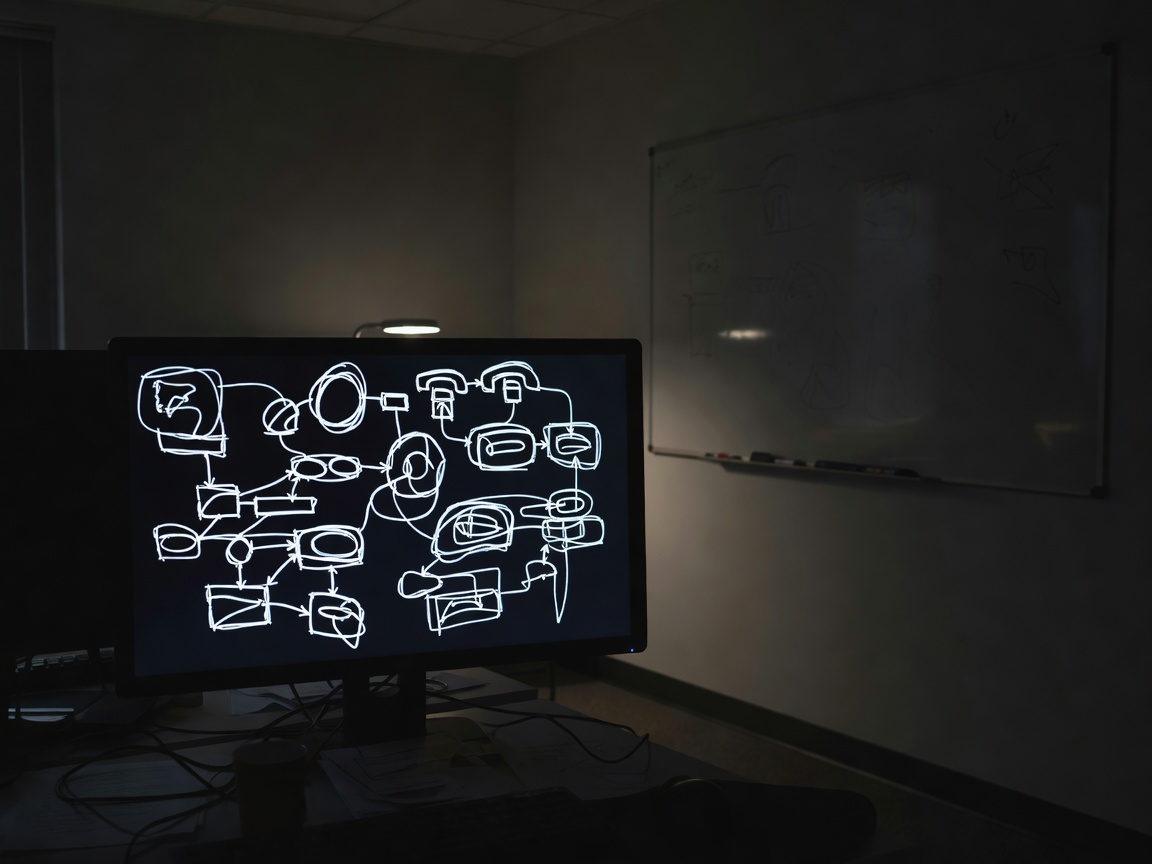
Hand-drawn style diagrams on a dark monitor in a dim officeDrawing · Canvas

tldraw

An infinite whiteboard that opens instantly in the browser. Its open-source canvas engine has become a playground for experiments that pair sketching with AI, turning rough drawings into working prototypes.

Visit tldraw →
Colourful data visualisation on a screen in a moody, darkened roomData · Storytelling

The Pudding

Visual essays that explain culture with data: music, language, film. Each story is designed around its own question, so no two look alike. A model for scrollytelling done with restraint.

Visit The Pudding →
Dim aisle between server racks with small green status lightsMemory · Archive

Wayback Machine

The Internet Archive's record of the web over time. Not new, but newly essential: it is how researchers check what a page said last year and how link rot is quietly repaired across the web.

Visit the Wayback Machine →
Playful browser game on a laptop screen in a dark bedroomPlay · Curiosity

Neal.fun

A collection of browser toys about scale, money, space and time. Each one teaches something without announcing that it is educational, which is precisely why people share them.

Visit neal.fun →

Patterns we keep noticing

Put these sites side by side and a few shared habits emerge. They commit to one central interaction, whether that is a globe, a canvas or a draggable diagram, and they let it carry the experience. They load quickly and avoid sign-up walls, so the first impression is the product itself. And most of them are made by very small teams or a single person, which suggests that inventiveness on the web is still a matter of taste and patience more than budget.

There is a lesson here for anyone building today. New browser capabilities, from WebGL and WebGPU to the View Transitions API, make ambitious work cheaper than ever. The constraint is no longer what the platform can do but whether a maker has a clear idea worth expressing.

How to read these reviews

We revisit this list periodically. When a site changes significantly or goes offline, we update the note rather than quietly deleting it, and we link to an archived copy where one exists. If you think something deserves a place on the shelf, the field-note tool is the fastest way to tell us. For the technologies that make sites like these possible, continue to What Browsers Learn Next.